
Natural Ingredients in Men's Grooming: What to Look for and What to Avoid in 2026
#natural-ingredients-mens-grooming-2026
You're standing in the grooming aisle, staring at bottles covered in buzzwords like "natural," "clean," and "plant-based." Your skin is tired of razor bumps and irritation, but you can't tell which products actually work versus which ones are just expensive marketing.
The grooming industry throws around ingredient claims without explaining what they mean for your skin. Some "natural" products are loaded with irritants. Some synthetic ingredients actually work better than their plant-based alternatives. And if you have melanin-rich skin prone to razor bumps, the stakes are even higher — you need ingredients that won't make inflammation worse.
This guide cuts through the noise. You'll learn which natural ingredients deliver real results, which synthetic ones to embrace, and which ingredients to avoid completely. No lab coat required.
Why Natural Ingredients Matter (And When They Don't)
Natural doesn't automatically mean better for your skin. Poison ivy is natural. So is alcohol that strips your skin barrier.
The real question is: does this ingredient solve your specific skin problem without causing new ones?
For men dealing with razor bumps, ingrown hairs, and post-shave irritation, certain natural ingredients have proven anti-inflammatory and healing properties. Others are gentler alternatives to harsh synthetic chemicals that can worsen sensitivity.
But some synthetic ingredients — like salicylic acid for exfoliation or glycerin for moisture — outperform their natural counterparts. The best grooming products combine both natural and synthetic ingredients strategically.
The Natural Ingredients That Actually Work
Essential Oils with Proven Benefits
Hemp Seed Oil
Contains omega-3 and omega-6 fatty acids that reduce inflammation and support skin barrier repair. Unlike CBD oil, hemp seed oil won't get you high — it comes from the seeds, not the flower. It absorbs quickly without leaving a greasy residue, making it ideal for post-shave care.
Argan Oil
Packed with vitamin E and antioxidants that help heal razor damage and prevent scarring. Argan oil is lightweight enough for daily use and won't clog pores. It's particularly effective for men with coarse hair who experience more friction during shaving.
Jojoba Oil
Technically a wax ester, jojoba closely mimics your skin's natural sebum. It balances oil production, reduces inflammation, and creates a protective barrier without feeling heavy. Perfect for both dry and oily skin types.
Black Seed Oil
Contains thymoquinone, a compound with anti-inflammatory and antimicrobial properties. Black seed oil helps prevent infected ingrown hairs and reduces the redness associated with razor bumps. It's been used medicinally for centuries, but modern research backs up its skin benefits.
Coconut Oil (Fractionated)
Regular coconut oil can clog pores, but fractionated coconut oil removes the comedogenic components while keeping the moisturizing and antimicrobial benefits. It's excellent for preventing bacterial growth in hair follicles.
Plant-Based Actives That Deliver
Willow Bark Extract
Nature's salicylic acid. Willow bark provides gentle exfoliation to prevent ingrown hairs without the irritation that synthetic salicylic acid can cause on sensitive skin. It's particularly beneficial for men who shave daily.
Chamomile Extract
Contains bisabolol and chamazulene, compounds that calm inflammation and reduce redness. Chamomile works especially well for post-shave irritation and razor burn.
Aloe Vera (Real, Not Filler)
Look for products where aloe vera appears high on the ingredient list. Real aloe contains polysaccharides that speed healing and provide immediate cooling relief. Avoid products that list "aloe barbadensis leaf juice" at the bottom — that's mostly water.
Green Tea Extract
Rich in polyphenols that fight free radical damage and reduce inflammation. Green tea extract helps prevent the oxidative stress that can worsen razor bumps and slow healing.
The Synthetic Ingredients to Embrace
Not all synthetic ingredients are villains. Some are gentler and more effective than natural alternatives.
Glycerin
A humectant that draws moisture to your skin. Synthetic glycerin is identical to plant-derived glycerin but more consistent in quality and purity.
Hyaluronic Acid
Holds up to 1,000 times its weight in water. While it can be derived from natural sources, synthetic hyaluronic acid is more stable and effective in grooming products.
Niacinamide (Vitamin B3)
Reduces inflammation, regulates oil production, and strengthens the skin barrier. Synthetic niacinamide is more potent and stable than natural sources.
Panthenol (Pro-Vitamin B5)
Converts to pantothenic acid on your skin, promoting healing and moisture retention. Synthetic panthenol is more concentrated than natural sources.
Red Flag Ingredients to Avoid
These ingredients can worsen razor bumps, cause irritation, or provide no real benefit despite natural-sounding names.
Harsh Preservatives and Chemicals
Parabens (Methylparaben, Propylparaben, Butylparaben)
Linked to hormone disruption and can cause allergic reactions. They're particularly problematic for sensitive skin prone to razor bumps.
Sulfates (Sodium Lauryl Sulfate, Sodium Laureth Sulfate)
Strip your skin's natural oils, leading to dryness, irritation, and increased sensitivity. Your skin overcompensates by producing more oil, creating a cycle of problems.
Petroleum-Based Ingredients
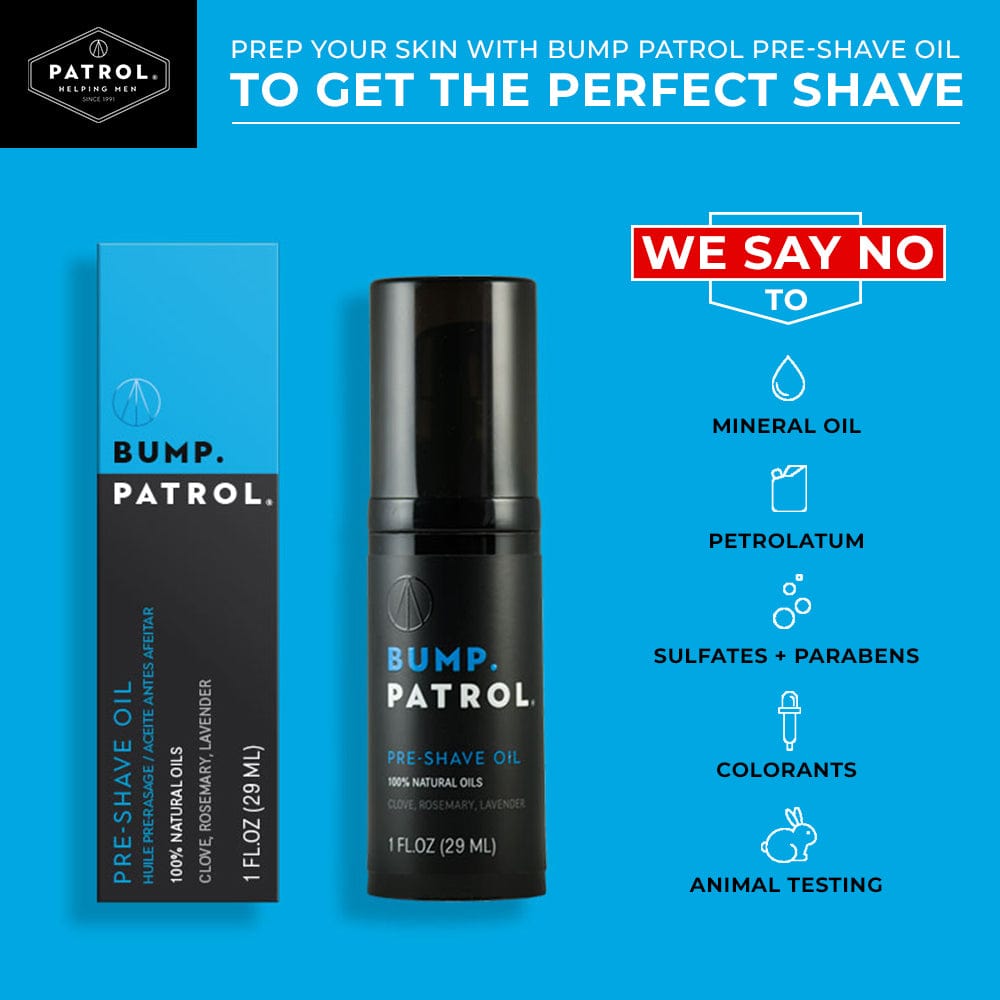
Mineral oil, petrolatum, and petroleum jelly create a barrier that can trap bacteria and clog pores. They provide temporary moisture but don't actually improve skin health.
Denatured Alcohol (Alcohol Denat)
Extremely drying and irritating, especially after shaving when your skin barrier is compromised. Some products use it to create a "tightening" sensation, but it's damaging long-term.
Problematic Natural Ingredients
Essential Oils in High Concentrations
Tea tree oil, peppermint oil, and eucalyptus oil can cause contact dermatitis and worsen inflammation when used in high concentrations. They're fine in small amounts but problematic as main ingredients.
Fragrance (Natural or Synthetic)
Often the biggest cause of allergic reactions in grooming products. "Natural fragrance" isn't necessarily safer than synthetic fragrance.
Witch Hazel with High Alcohol Content
Pure witch hazel extract is beneficial, but many commercial witch hazel products contain 10-15% alcohol, making them too harsh for post-shave use.
Menthol
Creates a cooling sensation but can irritate sensitive skin and worsen razor burn. It's particularly problematic for men with melanin-rich skin prone to post-inflammatory hyperpigmentation.
How to Read Ingredient Lists Like a Pro
Ingredients are listed in descending order by concentration. The first five ingredients make up the majority of the product.
Look for:
- Water or aloe vera as the first ingredient (shows the base isn't harsh)
- Natural oils and extracts in the first 10 ingredients
- Preservatives at the end of the list (they're needed but should be minimal)
Red flags:
- Alcohol denat in the first five ingredients
- Long lists of unpronounceable chemicals
- Vague terms like "fragrance" or "parfum" high on the list
- Multiple parabens or sulfates
Special Considerations for Melanin-Rich Skin
Men with darker skin tones face unique challenges that require specific ingredient considerations.
Prioritize Anti-Inflammatory Ingredients
Melanin-rich skin is more prone to post-inflammatory hyperpigmentation (dark spots after irritation). Look for ingredients like niacinamide, licorice root extract, and kojic acid that prevent and fade dark spots.
Avoid Harsh Exfoliants
Physical scrubs and high-concentration acids can cause micro-tears that lead to scarring and dark spots. Stick to gentle chemical exfoliants like willow bark extract.
Choose Heavier Moisturizers
Melanin-rich skin tends to be drier and may need richer formulations with ingredients like shea butter, ceramides, and squalane.
Building Your Natural Grooming Routine
Start with products that combine proven natural ingredients with effective synthetic ones.
For Razor Bump Prevention:
Look for pre-shave oils with jojoba and argan oil, plus gentle exfoliants like willow bark extract.
For Post-Shave Care:
Choose aftershaves with aloe vera, chamomile, and hemp seed oil. Avoid alcohol-based products that create more irritation.
For Daily Maintenance:
Use moisturizers with hyaluronic acid, niacinamide, and natural oils to maintain healthy skin between shaves.
The Bottom Line on Natural Grooming
The best grooming products don't choose between natural and synthetic — they use both strategically. Natural ingredients like hemp seed oil, argan oil, and aloe vera provide proven anti-inflammatory and healing benefits. Synthetic ingredients like glycerin and niacinamide offer consistent, effective results.
What matters most is avoiding ingredients that worsen your specific skin concerns. If you're dealing with razor bumps and ingrown hairs, prioritize gentle, anti-inflammatory ingredients over harsh chemicals or high-concentration essential oils.
Your skin doesn't care whether an ingredient comes from a lab or a plant. It cares whether that ingredient helps or hurts.
The grooming industry has made ingredient transparency a priority because customers demand it. Use that transparency to make informed choices about what goes on your skin. Read labels, understand what ingredients do, and choose products based on results, not marketing claims.
Ready to experience the difference that clean, effective ingredients can make? Patrol Grooming combines proven plant-based ingredients like hemp, argan, and coconut oil with gentle synthetic actives — all in paraben-free, sulfate-free formulas designed to eliminate razor bumps in 48 hours. Learn more at patrolgrooming.com.