
Shaving Gel vs Shaving Cream: Which Is Better for Preventing Razor Bumps?
Table of Contents
- Why Your Pre-Shave Product Actually Matters
- What Is Shaving Cream?
- What Is Shaving Gel?
- Shaving Gel vs Shaving Cream: Head-to-Head Comparison
- Which One Should You Use Based on Your Skin Type?
- Application Technique Matters as Much as the Product
- What to Do After You Shave
- FAQs
Why Your Pre-Shave Product Actually Matters
Razor bumps don't start with the blade. They start before the blade ever touches your skin.
If you're dealing with bumps, redness, or ingrown hairs after every shave, your technique and your pre-shave product are worth a close look. The right shaving lubricant softens hair, protects skin, and lets the razor glide cleanly instead of dragging and cutting at awkward angles — which is exactly how ingrown hairs start.
So the question is: does it matter whether you use shaving gel or shaving cream? Yes, more than most people realize. Here's how to choose.
What Is Shaving Cream?
Shaving cream is a whipped, foam-like formula that's been around for decades. It typically comes in a tube or tub and requires you to work it into a lather using a brush or your hands before applying it to your face.
Traditional shaving creams are thick and rich. They create a cushion between your skin and the blade. The lathering process also helps lift hair away from the skin, which makes cutting cleaner.
The downside? Many conventional shaving creams contain sulfates, parabens, and synthetic fragrances that can irritate sensitive skin. If your skin is already prone to bumps or inflammation, those ingredients can make things worse — not better.
What Is Shaving Gel?
Shaving gel is a clear or translucent formula that goes on thin and stays that way. You apply it directly to wet skin, no brush required. It doesn't foam up into a thick lather, which is actually part of what makes it useful.
Because gel stays clear, you can see exactly where you're shaving. That matters a lot if you're working around a beard line, shaping edges, or shaving sensitive areas where precision counts.
Gels tend to have a higher concentration of conditioning agents and moisturizers. Many modern shaving gels — especially plant-based ones — skip the sulfates and parabens entirely, which is better news for skin that reacts easily.
Shaving Gel vs Shaving Cream: Head-to-Head Comparison
Lubrication and Razor Glide
Both products create a protective layer between your skin and the blade, but they do it differently.
Shaving cream builds a thick foam barrier that cushions the razor. It works well for a close, comfortable shave on a flat surface. Shaving gel creates a slicker, more even coating that reduces drag across the skin.
For people with coarse or curly hair — who are more prone to razor bumps — reducing drag is especially important. When a razor drags instead of glides, it's more likely to cut hair at a sharp angle below the skin surface. That's where ingrown hairs come from.
Edge: Shaving gel, for its consistent, low-drag glide.
Visibility While Shaving
Shaving cream is opaque. Once it's on your face, you're working blind. That's fine for a full shave, but it makes precision harder.
Shaving gel stays clear. You can see your skin, your hair growth pattern, and your beard line throughout the entire shave. For anyone shaping edges or working around a beard, that visibility is a real advantage.
Edge: Shaving gel, especially for detailed work.
Ingredients and Skin Sensitivity
This is where the gap between products gets significant — and where you need to read labels.
Many drugstore shaving creams are loaded with ingredients your skin doesn't need: sodium lauryl sulfate (a harsh foaming agent), artificial fragrances, and preservatives that can trigger irritation. If you have sensitive skin or are already dealing with razor bumps, these ingredients can extend the problem.
Shaving gels, particularly plant-based formulas, are more likely to include skin-conditioning ingredients like aloe vera, glycerin, and essential oils. These hydrate the skin and reduce post-shave inflammation instead of adding to it.
That said, not all gels are clean. Some aerosol shaving gels contain the same harsh chemicals as cheap creams. Always check what's actually in the formula.
Edge: Depends on the formula, but clean shaving gels tend to be gentler on reactive skin.
Best for Razor Bumps and Ingrown Hairs
Razor bumps — clinically called pseudofolliculitis barbae — happen when shaved hair curls back and grows into the skin instead of outward. People with coarse or curly hair are statistically more prone to this condition.
The pre-shave product you use affects how cleanly the razor cuts and how much trauma the skin experiences. A formula that softens hair thoroughly, reduces drag, and doesn't contain irritating chemicals gives your skin a better starting point.
Shaving gel wins here for a few reasons:
- Better razor glide means less dragging and fewer sharp-angled cuts
- Clear application lets you shave with the grain more accurately
- Plant-based gels often include soothing ingredients that reduce inflammation before it starts
Edge: Shaving gel, for those actively managing razor bumps or ingrown hairs.
Which One Should You Use Based on Your Skin Type?
Not every skin type responds the same way. Here's a quick breakdown:
| Skin Type | Better Choice | Why |
|---|---|---|
| Sensitive or bump-prone | Shaving gel (plant-based) | Less irritation, better glide, cleaner ingredients |
| Dry skin | Shaving cream (moisturizing formula) | Thicker lather adds more hydration |
| Oily skin | Shaving gel | Lighter formula, less residue |
| Coarse or curly hair | Shaving gel | Reduces drag, improves precision |
| Normal skin | Either | Personal preference applies |
| Shaving legs or bikini area | Shaving gel | Precision and visibility on curved surfaces |
If you're prone to razor bumps regardless of where you shave — face, head, or body — a clean shaving gel is the safer starting point. You can always adjust from there.
Application Technique Matters as Much as the Product
You can use the best shaving gel available and still get razor bumps if your technique is off. A few things that make a real difference:
Prep your skin first. Shave after a warm shower or apply a warm, damp towel to your face for two minutes. Heat softens hair and opens pores, making the shave cleaner from the start.
Apply product to wet skin. Both gel and cream perform better on damp skin. Dry application reduces lubrication and increases friction.
Shave with the grain. Going against the direction of hair growth gives a closer shave but dramatically increases the risk of ingrown hairs — especially for people with coarse or curly hair. Shave with the grain first. If you need a closer result, go across the grain on the second pass, not against it.
Use light pressure. Pressing down hard doesn't improve the shave. It increases skin trauma. Let the razor do the work.
Rinse the blade often. A clogged blade drags. Rinse every two to three strokes.
Replace your blade regularly. A dull blade is one of the top causes of razor bumps. If you're shaving daily, replace the blade every five to seven shaves.
What to Do After You Shave
Your pre-shave product sets the stage, but your aftershave routine is where you actually stop bumps from forming.
After you rinse off the shaving gel or cream, your skin is temporarily vulnerable. Pores are open. Hair follicles are exposed. This is the moment to apply a targeted aftershave treatment — not a generic splash that smells good but does nothing.
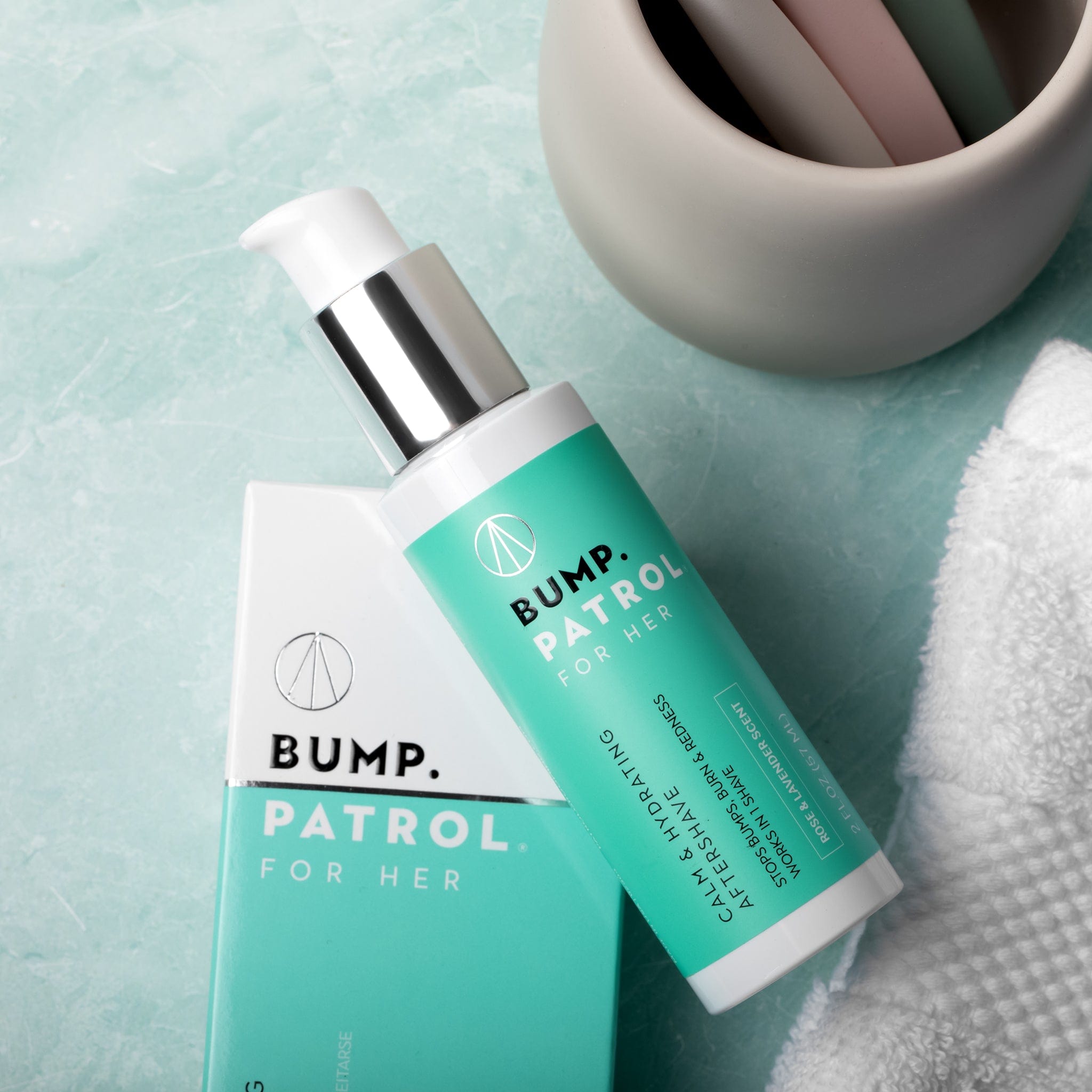
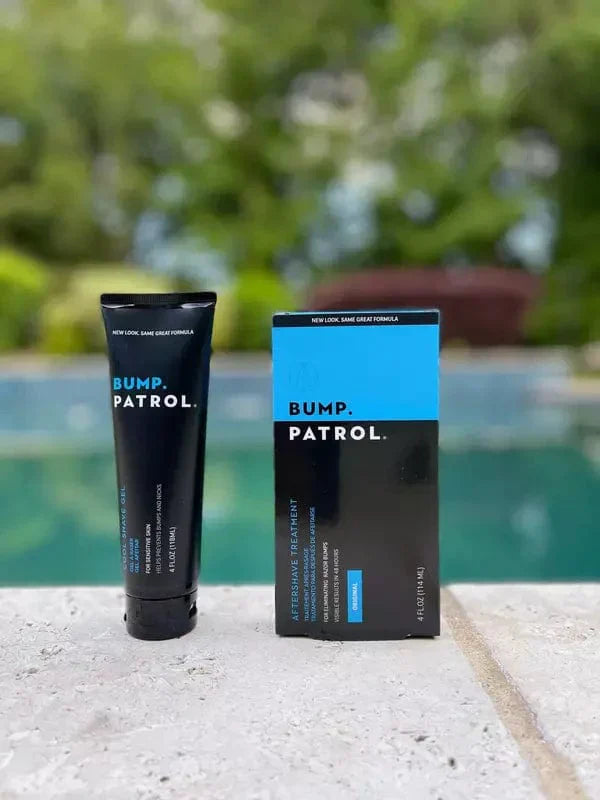
Bump Patrol Max Strength Aftershave from Patrol Grooming is formulated specifically for this moment. It targets razor bumps and ingrown hairs with a plant-based formula that's free of parabens, sulfates, petroleum, and mineral oil. Customers report visible improvement within 48 hours — and the brand backs that with a money-back guarantee. Over 12 million bottles sold.
If you're building a full routine, the Perfect Shave Kit at patrolgrooming.com pairs shave products with aftershave treatment so every step of your shave works together. That's the difference between managing bumps after the fact and preventing them from the start.
FAQs
Q: Is shaving gel or shaving cream better for razor bumps?
A: Shaving gel is generally better for preventing razor bumps. It provides consistent razor glide, stays clear so you can shave more precisely, and plant-based formulas tend to include fewer irritating ingredients than traditional shaving creams.
Q: Can shaving cream cause razor bumps?
A: Shaving cream itself doesn't directly cause razor bumps, but some formulas contain sulfates and synthetic fragrances that irritate skin. If your skin is already sensitive or bump-prone, these ingredients can make post-shave inflammation worse.
Q: Do I need to use a brush with shaving cream?
A: Not always, but using a brush helps build a better lather and lifts hair away from the skin, which can improve the quality of the shave. Shaving gel doesn't require a brush — it applies directly to wet skin.
Q: What ingredients should I look for in a shaving gel for sensitive skin?
A: Look for plant-based ingredients like aloe vera, glycerin, hemp oil, argan oil, or coconut oil. Avoid formulas with sodium lauryl sulfate, artificial fragrances, parabens, and mineral oil, especially if your skin reacts easily.
Q: Does shaving with the grain actually reduce razor bumps?
A: Yes. Shaving with the grain reduces the risk of hair being cut at a sharp angle below the skin surface, which is the main cause of ingrown hairs. It's one of the most effective technique changes you can make.
Q: Is shaving gel good for shaving legs and the bikini area?
A: Yes. Shaving gel works well for legs and the bikini area because it stays clear, giving you better visibility on curved surfaces. A plant-based, fragrance-free formula is especially useful for sensitive areas prone to ingrown hairs.
Q: What should I apply after shaving to prevent razor bumps?
A: Apply a targeted aftershave treatment formulated for razor bumps and ingrown hairs — not just a general moisturizer. Patrol Grooming's Bump Patrol Max Strength Aftershave is designed specifically for this, with a clean formula and a 48-hour results guarantee. Learn more at patrolgrooming.com.
Your pre-shave product is one piece of the puzzle. Pair the right shaving gel with solid technique and a proven aftershave treatment, and you give your skin a real chance at staying clear. Start with what goes on before the blade, finish with what protects you after — and stop settling for bumps that don't have to be there.